Letter to Self

I just got home after an absolutely stunning fall day with my preservice teachers class – Education and Schooling.

This year, I’m again using an old trick I learned from the amazing Benjamin Zander. I’m getting them to write letters to themselves. They write a letter to themselves, saying why they got an A in the class. They write about who they will be after a year in class. I give them an envelope and stamp and then collect the letters which I’ll post in May, at the end of Teacher’s College.

I’ll let Benjamin Zander explain fully (like only he can) in this video excerpt.


Find more videos like this on EFL CLASSROOM 2.0

I am doing this for many reasons and not just for the surprise and joy of getting a “real” letter! I think it will foster and nurture a level of reflection but also, it will help tamper down the competitive demons that seem to plague both teaching and especially “becoming a teacher”.

The students seal their letters and I won’t be reading them. This is for themselves only and they are the only ones to be surprised or disappointed by the letter they’ll receive. We get what we put in ….

I’m writing this blog post because I also, in the vein of being a teacher that “participates” with students and practices his own constructivist principles, wrote a letter. I wasn’t intending to share it on this blog. However, I left my folder with lesson notes/plan and the letter at home. I couldn’t read it to my students. So alas,this compromise. Find the letter to myself below, for student reading but might be of interest to any and all teachers. Please forgive the length!

May 02, 2012

Dear class,

I deserved my A because I gave it my best shot.

What I mean is that given whatever our circumstances as teachers, we really have that as our yardstick and measure. I don’t agree a lot with the current mantra of “weed out the bad teachers”. There are no good or bad teachers – we are all adrift in the wind of our own circumstances and the only heights, the only bar we need climb over is that – we did our best.

This year I challenged myself in several ways and that’s why I got an A.

One. I asked my students to be responsible for their own learning and to be their own engine and light. I challenged them with the task of taking the curriculum provided and learning it of their own volition, curiosity and need. It was tough at the beginning but with time, students saw the classroom as a place of inquiry and thought, where their battle was only with themselves. And they grew more responsible and receptive of that freedom I gave them.

I deserved my A for avoiding teaching by numbers and allowing teachers to grow into their own teaching skins, boots, beliefs.

I got an A because I came prepared to my classes. Sometimes less, sometimes more – but that’s life. My best was done.

I got an A because I think I modeled a type of teacher we might want in our schools and profession. One constantly engaged in professional development, transparent and sharing ideas and resources. There is no finish line.

I deserved my A because I learned from my students and didn’t just teach them. When one teaches, two learn.

Lastly, I got an A because despite the dark, wretched winters here, I kept seeing the cup half full. Kept the class thinking and positive. Kept engaged and engaging knowledge. Kept being happy to come to class and have a place to be a teacher. It was never a chore but an honor.

It’s been a great year. I’ve developed so much. Like a tree, I have one more circle added and that will forever embrace and mark me.

Sincerely,

Your teacher, David

If you liked this post, you may enjoy, “Reflective Now, Reflective Then”

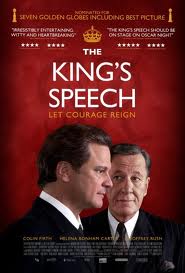
5 lessons for educators from “The King’s Speech”

kingsOne of the nice things about the small city I moved to recently, is that it has a wonderful theater downtown, minutes from my house. Every Sunday, they have a $5 showing and tonight they showed “The King’s Speech”. Great movie, highly recommend it despite my aversion to “period pieces”, especially British ones! Go see it and if you are in the mood, think about the lessons that it might have for us teachers. Here are 5 points I took home from this remarkable film:

1. The importance of the “informal”, especially when dealing with language learning.

Lionel, ever the informal Aussie, really insists on a first name basis for their teacher – student relationship. He insists on calling the king, “Bertie”. Moreover, he stresses informality and humor in the teaching environment. This is so important a concept for language / literacy teachers – lightening the “affective filter” so language may be acquired. Here’s a clip to remind us of this important dynamic of teaching. {and also note how there must be a name – research suggests that using a student’s name during instruction can alone, raise scores and help learning, as opposed to no name being used.}


2. Credentials are over valued.

There is a scene at the end of the movie where the king is angry/overcome upon learning that “Dr.” Lionel has no official “credentials”. That he learned everything through the “teacher’s college of hard knocks”.

The point is – teachers are not trained or taught, they are developed. This is a big point. Credentials are not as important as we think, in our over crazed world for a certificate, any certificate. Recently I was looking through the local college’s course offerings – you can get a diploma in anything! And it takes 2 years! Dog grooming, two years. Flower arranging, two years. Oh, don’t get me started….

In TEFL, I will keep praising the backpacking teacher. Sure, there are some bad apples but overall, the profession benefits. I’ve witnessed too many great teachers in action, great teachers without a modicum of formal training, to think otherwise. Teachers should be judged on what they do in class and have done in classes. A system of merit not credentials. Bertie proves this.

3. Teaching is mostly about relationships.

In the movie, the relationship between teacher and student grows as it goes through a rocky series of ups and downs. The movie shows a man teaching/helping a student, not teaching a subject. The personal is evident and attended to by the ever consummate professional, Lionel.

Teaching is about the relationships we form with students, how we connect with them. It doesn’t have to be overly personal but we have to connect on some “human” level, to be successful and make a difference. Further, we have to also realize our students have their own lives and background. Just like the King, each student has their own world they bring into the classroom. Teacher’s must know their students – administrators have to give teachers more time to develop relationships and less time for paperwork and lesson drafting.

4. A Teacher’s Belief is what counts.

Passion makes the “great teacher”. Passion for their subject but also passion for their students. Lionel truly believed in his student, the king. Truly, 150%. He told him, he kept with him along the struggle to succeed and learn. Never discount the power of a teacher’s faith in their student to transform the world. We all remember our homerun teachers. And what made them have such an impact on us, was the faith in us that we felt they had. Research too shows this is more than just emotional snake oil. In blind studies, a teacher’s belief in their student’s ability (thinking they were teaching a class of high achievers when they were not) increased the student’s own scores. Yes, faith can move a marking sheet!

5. Childhood development is crucial to long term success.

“Bertie” experienced a lot of trauma in his development. His “inability” both in stuttering but also (and they are sides of the same coin) emotionally was because of a lack of a proper environment when growing up. We have to continually fight for all students to get the support and nurturing that is required at an early age so they may succeed at school.

A lot of what we see at school – what we call failure and non-achievement is not because of a student’s own laziness or inability. It is societal. We don’t value the young until it is too late, despite our pronouncements and platitudes. If we put as much money into universal early education and child development as we did Trident subs – we’d have a much different world in our high schools and universities. I kid you not. Look at the damage Bertie suffered. Many will tell you it is just “physical” etc… Don’t believe the buggers – it is all about how the child is raised in 95% of cases. We need to follow more, the principles of re-education.

Let’s too, also remember how determining environment is for language and literacy development.

If you haven’t seen the movie – here’s a trailer to wet your appetite. Enjoy!

If you enjoyed this – you might enjoy, “What makes a great teacher?”